
There’s a very specific moment most people experience at some point during the day.
It usually creeps in mid-afternoon. You’ve done enough to justify a break, not enough to feel productive, and suddenly your brain decides it’s time to snack. Not a meal. Not anything sensible. Just something.
This is where things tend to go wrong. Because most snacks fall into two categories: either they’re gone in seconds and you’re immediately looking for more, or they’re “healthy” in a way that feels more like a punishment than a reward. And somehow, neither option leaves you particularly satisfied.
Which is exactly why biltong has quietly found its way into so many people’s routines. It didn’t arrive with a big announcement. No dramatic rebrand of snacking. It just started appearing, in gym bags, desk drawers, glove compartments, and before long, people realised it solved a problem they didn’t quite know how to fix.
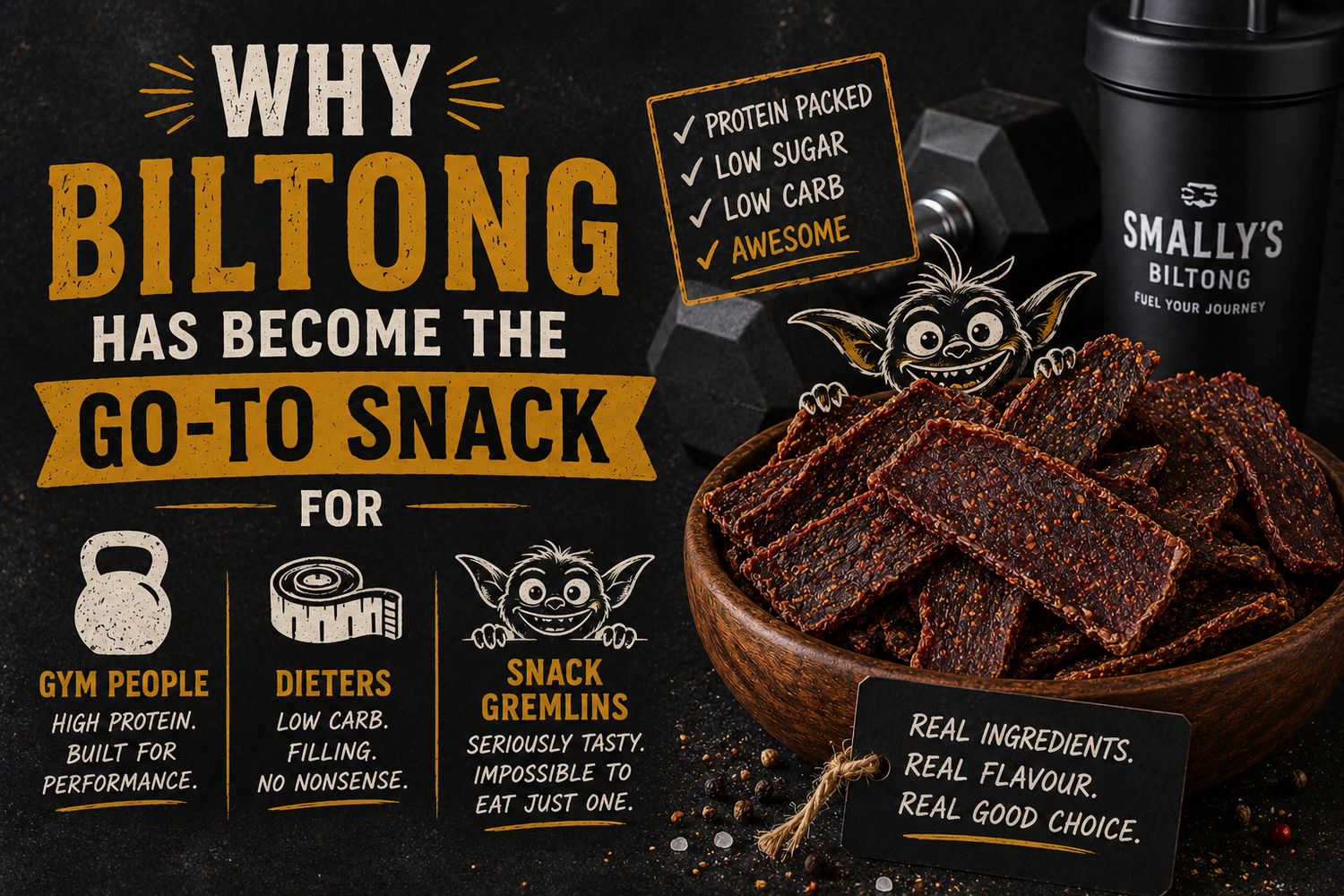
It probably makes sense that the gym crowd got there first.
Spend any time around people who train regularly and you’ll notice how much attention goes into protein. Not in a casual way either, it becomes part of the routine, something you’re constantly trying to stay on top of. And fair enough, it matters.
The issue is that most “protein snacks” don’t exactly inspire excitement. They do the job, technically, but often feel like something you’re forcing down out of obligation rather than enjoyment. There’s always a slight compromise, taste, texture, or both… Biltong doesn’t really play that game.
It’s just beef, done properly. High in protein, naturally, without needing to be processed into something unrecognisable. You eat it and it feels like actual food, which sounds obvious, but makes a bigger difference than people realise. That’s why it stuck. It fits into that post- workout moment without feeling like part of the chore.
From there, it didn’t take long for the diet crowd to catch on.
Because if there’s one thing that derails most diets, it’s not the meals. It’s everything in between. The little decisions. The handful of something here, the “just one” that turns into three a bit later on. Biltong works because it cuts through that cycle.
It’s filling in a way most snacks aren’t. You don’t eat it and immediately start thinking about what’s next. It holds you steady for a bit. There’s no sugar rush followed by a dip, no feeling like you’ve just made things harder for yourself.
And without trying too hard, it fits neatly into the way a lot of people are trying to eat now.Higher protein, lower sugar, fewer ingredients you have to Google. It wasn’t designed for that purpose, but it happens to land there quite comfortably.
Then you’ve got the third group - the ones who aren’t really thinking about macros or meal plans at all. The snack gremlins.The people who snack because it’s there. Because they walked into the kitchen and something caught their eye. Because they’re working, or procrastinating, or just a bit bored. And somehow, biltong works for them too.
Part of it is the way you eat it. It’s not something you absentmindedly inhale. There’s a bit of chew to it, a bit of substance. You slow down, even if you didn’t mean to. You actually notice it. And that small difference changes how much you eat. It’s not about discipline. It’s just that you don’t need as much to feel satisfied. Which, for a snack, is a fairly impressive trick.
Another reason it’s taken off is that it doesn’t try too hard to convince you of anything.
A lot of snacks these days arrive with a full sales pitch. High this, low that, “guilt-free” stamped across the front like a badge of honour. By the time you’ve read it, you’re already a bit sceptical. Biltong doesn’t really bother with all that.
It’s been around for a long time, made in much the same way, and it hasn’t had to reinvent itself to stay relevant. It just happens to line up with what people want now, something simple, something filling, something that doesn’t feel overly processed.
That gives it a kind of quiet confidence. It’s not trying to win you over. It just tends to.
Of course, none of this would matter if it didn’t taste good. That’s the bit people sometimes overlook when they talk about “better” snacks. If it’s not enjoyable, it doesn’t last. You might buy it once with good intentions, but you won’t come back to it.
Biltong works because it’s genuinely satisfying. Rich, savoury, a bit salty in the right way. It doesn’t rely on sweetness to carry it, which means you don’t get that constant urge to keep going. You eat some, you enjoy it, and then - quite naturally… you stop. That’s a rare thing.
It also fits into real life without much effort. You don’t need to prepare anything, you don’t need to keep it in perfect conditions, and you don’t need to plan around it. It’s the kind of thing you can throw in a bag and forget about until you need it. And when something is that easy to live with, it tends to stick around.
None of this is to say it’s perfect. It’s still meat, still salted, and like anything, it can be overdone if you’re not paying attention. But it doesn’t push you in that direction. It doesn’t encourage mindless eating in quite the same way a lot of snacks do.
It sits somewhere in the middle, satisfying enough to stop you searching for more, but not so moreish that you lose track completely.
So why has biltong become the go-to?
Because it quietly does what most snacks fail to do.
It fills you up, it tastes good, and it fits into your day without making things complicated. Whether you’re coming out of the gym, trying to stay on track with your eating, or just looking for something decent to snack on, it makes sense.
No big claims. No gimmicks.
Just something that works.
And once people realise that, they tend not to go back.